Fine-Tuning Technical Efficiency for Link Building
Google's anti-spam systems do not actually care about your workflows and their "effectiveness". What they care about is mainly those utilized. To prevent that, the most safe mental design is: Automation is wonderful at moving data around, however it's horrible at earning trust. And link structure real link building is mostly about trust and importance.
If you've ever attempted to scale this, you already understand the bitter reality: you invest a stunning quantity of time doing just "admin SEO." Building lists. Discovering e-mails. And that's the home turf of automation. Where automation might stop working is the step where a 3rd party need to make a decision: "Yes, I'll mention you".
So when individuals state "automated link structure," it helps to split it into 2 kinds. is the safe one. It includes scraping, scoring, routing, follow-up series, QA, notifies, and reporting. is, on the contrary, the dangerous one. It consists of auto-posting to networks, automated link exchanges, automated paid positionings, and mass guest-post pipelines.
Software for ScaleNo, they're the ones that. When you do automation right, your group spends less time on sorting and chasing. Instead, they can concentrate on 2 things that in fact gain links: discovering a genuine fit and making a reliable contribution. Automation shines at the stage when you're developing the top of the funnel.
Proven Strategies for Scaling Automated SEO
Here's a prospecting scorecard you can utilize as a gate before anything reaches outreach. Indexed pages, constant publishing flow, non-zero presence Outbound link patterns Does it look like a link farm or "compose for us" mill? Reasonable outbound links, not obviously commercial-heavy Material quality Would a genuine person cite this as a source?
The majority of outreach fails for one boring factor: individuals pitch the incorrect thing to the wrong page type. You can enrich contacts (function, beat, section owner), pull the last 35 short articles, detect whether a page is an editorial post or a curated list, and then route potential customers into the ideal project track.
A pitch makes sense where attention already exists: unlinked mentions, dead links, or outdated recommendations. Individuals anticipate too much from AI in outreach and too little from strong mechanics.
Automated controls manage delivery timing, rate limits, reply detection, follow-ups, and contact health. However a human chooses: the last pitch angle ("why this matters to your readers") the relevance proof ("why you, why them, why now") the safe negotiation lines that keep you out of link-scheme area Automation handles information collection and updates.
Minimizing Digital Footprints in Automated Building
Human beings then take that raw input to organize it as a narrative covering why the trend matters, what it suggests, and how a reader should react. This matters more now due to the fact that Google has actually openly cracked down on massive content the more so if the material's been identified to video game rankings, not to assist users.
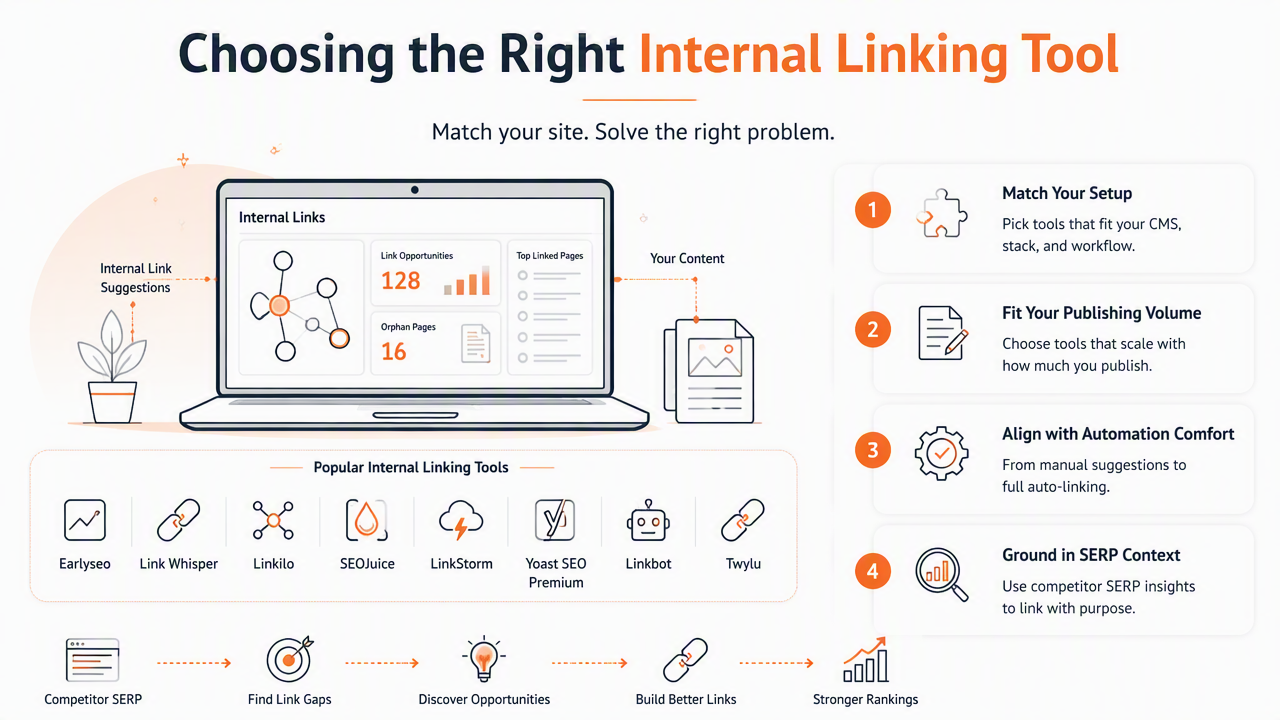
If you're creating pages mainly to have surface areas to point links at, you're off course. In our experience, for numerous websites, it's internal linking, not external link acquisition, that represents a bigger part of link-building effects. Google finds pages, comprehends which of them are essential, and determines hierarchy in between topics far more easily when helped through internal links.
Software for ScaleInternal connecting is completely automatable. What you can automate: spotting orphan pages linking new content back to core hubs identifying broken or dead internal links flagging pages that aren't well-linked internally providing anchor text choices based on intent clusters Automated link building may sometimes feel sketchy.
It frequently is just fixing reality: you were discussed however not connected a link broke because a URL altered a page 404 'd after a migration a website revitalized an article however dropped the initial citation Thanks to automation, you get the alert exactly the moment it takes place. What you can do now is actioning in with a low-friction message to the publisher.
The pleasant part here is that a backlink is a byproduct when you keep details precise and citations intact. In this area, let's see how automation ends up being hazardous (due to the fact that it tempts you to utilize it as "just a tool"). For Google, results and patterns matter, it's uninformed of your intent.