Incorporating Hardware Acceleration for Faster Image Acknowledgment

Technical Progress in the digital sector Relating To Automated Verification
Technological shifts in 2026 have forced a reword of how automated systems handle confirmation hurdles. While easy image acknowledgment once was sufficient, existing systems require a mix of behavioral simulation and high-performance hardware. The development of bot detection systems has actually reached a point where passive signals, such as mouse motions and sensor information, are as crucial as the real puzzle solution. For professionals handling information extraction or automated testing, staying ahead of these obstacles includes a deep understanding of server-side optimization and the mechanics of API communication.Modern verification difficulties frequently involve complicated visual puzzles or invisible background checks that evaluate the legitimacy of a user session. In the tech community, the focus has moved towards reducing the footprint of the automation engine. This means that the virtual private server (VPS) hosting the automation should be tuned to appear like a basic residential maker. If the underlying hardware or the network setup reveals the finger prints of an information center, even a perfectly fixed captcha will result in an obstructed demand.
Server Setup for High-Speed Data Retrieval
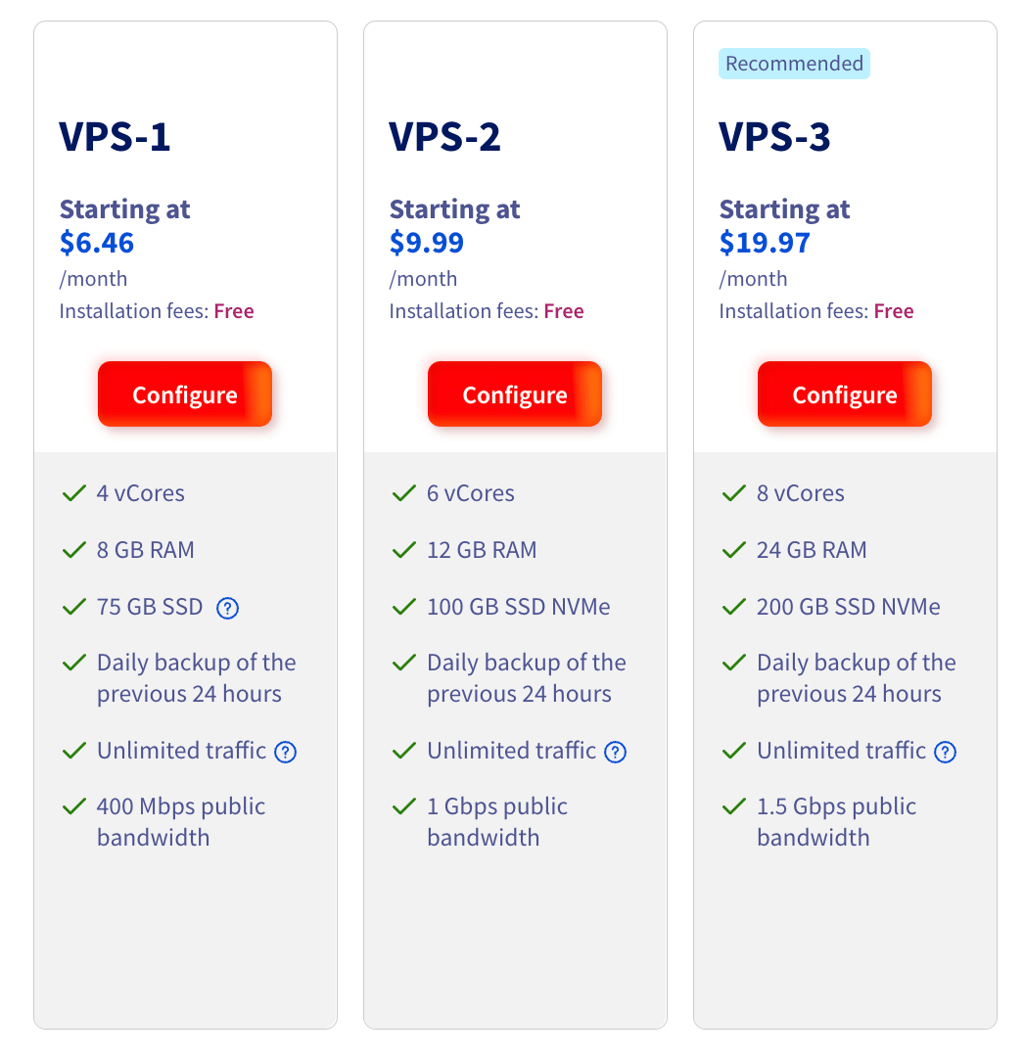
Enhancing a VPS for these jobs in 2026 includes more than simply choosing a strategy with high RAM. It requires a particular concentrate on CPU instruction sets and network throughput. Confirmation solvers depend on rapid-fire requests. If the CPU can not process the visual data rapidly enough, the session may time out or set off a secondary check. High-frequency cores are usually chosen over a high variety of slower cores. This makes sure that the JavaScript execution within headless web browsers stays within the anticipated timing window of a human user.Network latency is the most considerable bottleneck for companies relying on external solver APIs. Every millisecond invested waiting on a packet to take a trip between the VPS and the solver endpoint increases the danger of a session expiration. Numerous technical teams are now deploying their scripts on servers located in the exact same geographic areas as the solving clusters. This decrease in round-trip time is a crucial factor in maintaining high success rates for automated tasks.
Efficiency Criteria for Confirmation Systems in modern tech centers
Determining the success of an automation stack requires looking at several crucial metrics beyond a simple pass or stop working rate. The time-to-solve (TTS) metric has actually become a main sign of system health. In 2026, a TTS of under five seconds is the standard for complicated image puzzles. Accomplishing this requires the automation script to be light-weight. Heavy frameworks that take in excessive memory can trigger the VPS to swap data to the disk, which introduces enormous delays and ruins the behavioral profile of the session.Focusing on Asia Virtual Solutions Guidance helps groups determine where the overhead lies in their existing stack. Frequently, the bottleneck is not the solver itself but the method the script manages the browser circumstances. Memory management in Chromium-based internet browsers has actually always been an obstacle, however in 2026, developers use specialized flags to disable non-essential functions, such as hardware velocity and GPU sandboxing, to keep the memory footprint low. This permits a single VPS to run more concurrent threads without sacrificing the speed of each private resolve.
Incorporating API Solutions for Automation in the local market
The option between local AI-based resolving and third-party API combination depends on the scale and the specific type of challenge. Regional services provide the benefit of zero network latency but need substantial local resources, frequently needing a GPU-enabled VPS which can be costly. Third-party APIs, on the other hand, offer access to huge human-in-the-loop or AI-driven farms that can deal with nearly any kind of hurdle.API combination in 2026 normally utilizes WebSocket connections instead of standard HTTP POST requests to preserve a relentless link in between the automation script and the solver. This minimizes the overhead of consistently establishing TCP handshakes. Advanced applications utilize callback URLs or webhooks. Rather of the script ballot the API to see if an option is all set, the solver pushes the data back to the server once the task is completed. This method maximizes CPU cycles on the VPS, enabling it to perform other data processing tasks while awaiting the verification to clear.
Proxy Management and Its Role in Confirmation
Even the most optimized VPS and the fastest solver will fail if the IP address is flagged. Proxy rotation is an important part of the combination procedure. In 2026, the market has seen a relocation away from datacenter proxies toward domestic and mobile IPs. These addresses bring a much greater trust score since they are related to real home internet connections or cellular devices.When a captcha is provided, the website likewise tapes the IP address of the solver. If that IP is different from the one that initially asked for the page, it can trigger a security warning. Therefore, the finest practice is to route the solver's demand through the very same proxy utilized by the primary automation script. This keeps a consistent identity for the period of the session. Success in Asia Virtual Solutions Guidance depends upon this consistency, as any discrepancy in the network profile can cause an instant restriction or a limitless loop of puzzles.
Optimizing the Linux Kernel for High-Concurrency Tasks
System administrators in the enterprise sector typically exceed application-level tweaks and look at the operating system itself. Tuning the Linux kernel can offer a substantial boost in how the VPS handles thousands of synchronised connections. Adjusting the limits for open file descriptors and tuning the TCP stack criteria, such as the window size and the timeout worths, ensures that the server does not become overwhelmed during peak traffic.Disabling unneeded background services is another common step. A VPS dedicated to automation does not require a GUI, a mail server, or complex logging daemons. Stripping the OS down to its bare fundamentals ensures that every available CPU cycle goes towards the automation script and the confirmation handling. This level of optimization is what separates a amateur setup from a high-efficiency information collection engine.
The Development of Web Browser Fingerprinting
In 2026, websites no longer look simply at cookies. They take a look at the canvas fingerprint, the audio context, and the way the browser handles font styles. To bypass these checks, automation scripts must use advanced fingerprint masking tools. These tools obstruct the web browser's requests for hardware info and return worths that match a common, high-trust user profile.The difficulty is that these masking tools include their own layer of processing overhead. On an inadequately set up VPS, this can lead to "jank" or stammering in the browser's execution. Advanced detection systems can see this stuttering and conclude that the user is actually an automated script. For that reason, the hardware needs to be effective enough to handle the finger print spoofing in real-time without any obvious drop in efficiency.
Resource Management and Scaling Techniques
Scaling an automation project needs a modular method. Instead of running one huge server, many business in the regional tech field usage clusters of smaller sized VPS instances. This dispersed method supplies better fault tolerance. If one server is flagged or experiences a hardware concern, the remainder of the cluster continues to operate. Containerization has likewise end up being a requirement. Utilizing lightweight containers allows developers to release their whole stack, including the internet browser, the script, and the optimization settings, across different VPS companies with minimal setup. This versatility is essential in 2026, as it permits fast shifts in facilities if a particular hosting supplier's IP variety becomes less effective for particular targets.
Future Trends in Automated Resolving and Detection
As we move further into 2026, the fight between bot detection and automation continues to heighten. Making use of device finding out to produce more human-like habits is no longer a high-end however a requirement. Automated systems are now being trained on huge datasets of human interaction to imitate the subtle abnormalities of real users. This trend likewise reaches the confirmation puzzles themselves. We are seeing more "gamified" captchas that require a level of semantic understanding that simple OCR can not provide. The solvers of tomorrow will require to understand context and intent, which will require a lot more combination in between local VPS resources and high-end cloud AI. Efficiency in this environment is not practically speed however about the quality of the interaction.
Upkeep and Monitoring of High-Performance Stacks
A set-it-and-forget-it technique does not work in the world of high-speed automation. Real-time monitoring of the VPS is vital to identify when a website has actually upgraded its security steps. Unexpected drops in success rates or increases in solve times are early indication that the integration needs modification. Tools that track CPU usage, RAM consumption, and network I/O aid determine when a server is reaching its limitations. Oftentimes, a basic reboot or cleaning of the web browser cache can resolve performance destruction. However, more severe problems might require a complete modification in the fingerprinting strategy or a transfer to a various class of proxy. Constant testing and iteration are the trademarks of an effective operation in 2026. No matter the particular technical goal, the underlying concepts of hardware optimization and effective API use stay the foundation of success.